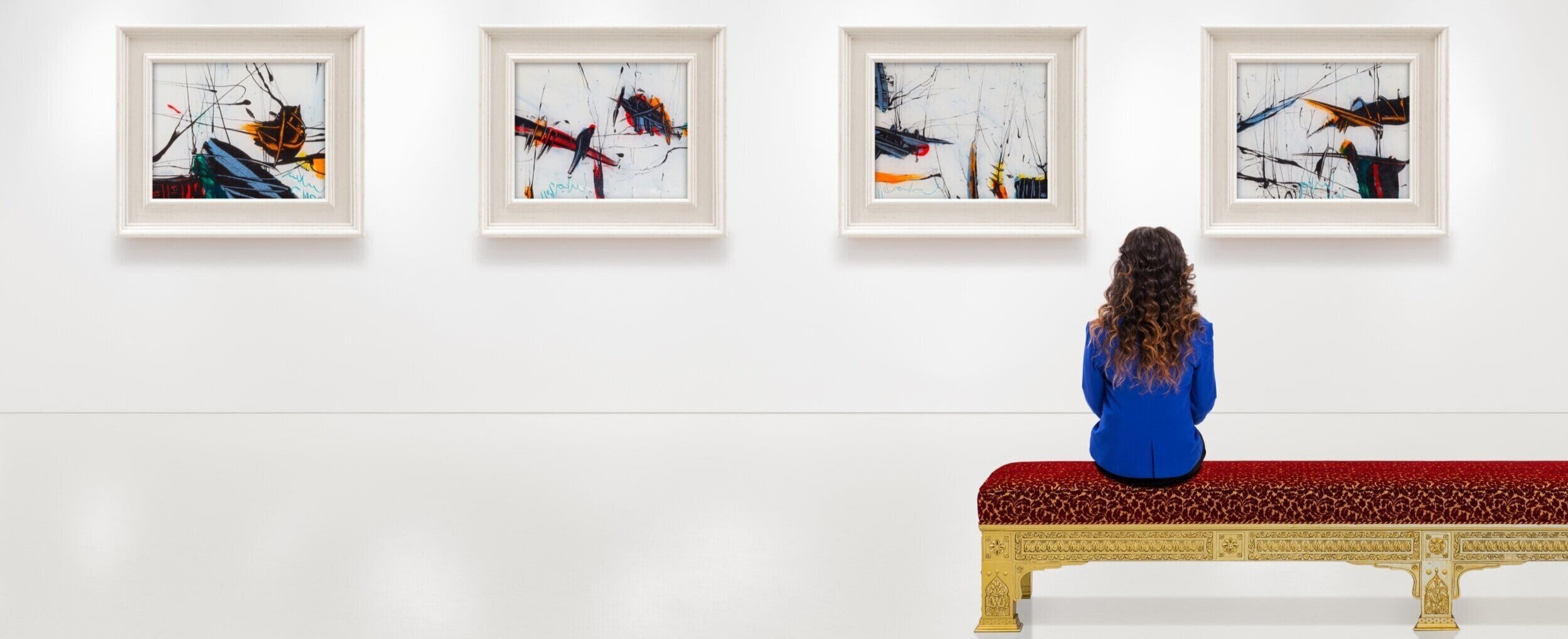



From paintings appearing in the background of a film to artworks featured in documentaries, the use of visual art in audiovisual productions raises copyright questions that are often overlooked.
A painting hanging on the wall of a film set, a sculpture appearing in a television series, or a photograph featured in a documentary may seem like a simple visual element. Yet incorporating an artwork into an audiovisual production can involve rights that are separate from those relating to the film itself.
For filmmakers, producers, galleries, collectors and artists, understanding these rights is an important part of ensuring that creative works can be used and exploited without unexpected legal complications.
Who owns the right to show an artwork?
Under Greek Copyright Law (Law 2121/1993), the creator of an original artwork enjoys exclusive economic rights, including the right to authorise its reproduction. Filming a protected artwork and incorporating it into an audiovisual production will generally involve the exercise of copyright and may require permission from the relevant rightsholder.
Importantly, ownership of the physical artwork does not automatically include ownership of its copyright. A collector who owns a painting, or a gallery that possesses it, is not necessarily entitled to authorise its reproduction in a film. The relevant rights may remain with the artist, their heirs or another authorised rightsholder.
Similarly, permission to film inside a museum, gallery or private collection does not necessarily include permission to reproduce the artworks displayed there.
Does permission always have to be obtained?
Not necessarily. The legal position depends on the nature of the artwork, the circumstances of its appearance and the applicable copyright exceptions.
In Greece and across the EU, copyright generally lasts for the author's lifetime and 70 years after death. Once that period expires, the work enters the public domain, although other rights or restrictions may still need to be considered.
There are also specific statutory exceptions. For example, Article 26 of Greek Copyright Law permits certain occasional reproductions and communications by mass media of artworks permanently situated in public places. However, this is a limited exception and should not be understood as a general permission to incorporate protected artworks into audiovisual productions.
The fact that an artwork appears only in the background of a scene does not, by itself, mean that its use is automatically permitted. The circumstances and applicable legal exceptions must be considered.
Why rights clearance matters
Where permission is required, the scope of the licence is particularly important. An artwork may appear in a film intended initially for festival screenings but later distributed internationally, broadcast on television or made available through streaming platforms.
A properly structured licence should address the intended uses, distribution channels, geographical scope, duration, remuneration and any relevant conditions concerning attribution or the presentation of the artwork.
For artists and their estates, licensing also provides an opportunity to retain appropriate control over how their works are reproduced and presented. Greek law protects not only economic rights but also moral rights, including attribution and the integrity of the work.
For producers, early rights clearance can avoid costly problems at a later stage, when an unresolved copyright issue may require editing, replacing or removing footage, or renegotiating rights before distribution.
Protecting creativity across artistic disciplines
As the boundaries between visual art, cinema, television and digital media become increasingly fluid, the legal relationships between these creative sectors are becoming more significant.
For filmmakers, incorporating artworks into audiovisual productions calls for careful consideration of copyright ownership and licensing. For artists, galleries and estates, the growing use of visual art in audiovisual content creates both opportunities for commercial exploitation and a need for appropriate protection of creative rights.
The practical approach is to address rights clearance early, identify the appropriate rightsholders and ensure that the intended use is supported by clear contractual arrangements. This allows different creative disciplines to interact while respecting the rights and interests of those involved.